



MOTS-C 40mg
£349.99
Research Studies:
- Facilitates AMPK activation by inhibiting the folate cycle and inducing AICAR accumulation assays
- Supports investigation into stress-induced nuclear translocation and antioxidant response element gene expression
- Enables research on GLUT4 translocation and fatty acid oxidation in metabolic homeostasis models
- Useful for evaluating myostatin inhibition through the AKT-FOXO1 and mTORC2 signaling pathways
MOTS-c: The Mitochondrial-Derived Peptide for Metabolic Innovation
Transform your laboratory’s metabolic research with Research Grade MOTS-c 40mg, a revolutionary mitochondrial-derived peptide (MDP). Encoded within the mitochondrial DNA rather than the nucleus, MOTS-c acts as a potent metabolic regulator and exercise mimetic. Our 99% purity standard ensures that your “Hardmaxxing” energy optimization data and systemic performance research are supported by absolute chemical consistency and lot-level traceability.
Strategic Benefits of Mitochondrial Signaling
-
Intracellular Metabolic Homeostasis: MOTS-c is primarily researched for its ability to target the skeletal muscle and enhance glucose metabolism. In a laboratory context, this allows for the study of improved insulin sensitivity and glucose disposal, critical for researchers documenting elite-level “Aesthetic Ascension.”
-
Exercise Mimetic Properties: Research indicates that the peptide activates the AMPK pathway, mimicking the systemic effects of high-intensity physical activity. For the Looksmaxxing community, this translates to studies on achieving a leaner, more metabolically active physique even during periods of restricted activity.
-
Mitochondrial Biogenesis & Longevity: The molecule is studied for its capacity to promote the creation of new mitochondria. This practical benefit results in enhanced cellular energy production, making it an essential tool for studies exploring biological rejuvenation and the mitigation of age-related metabolic decline.
-
Fat Oxidation & Weight Management: By modulating lipid metabolism, MOTS-c is researched for its potential to reduce fat accumulation and prevent diet-induced obesity. This feature allows for the documentation of superior body recomposition and metabolic flexibility in advanced research subjects.
Technical Data & Specifications
| Parameter | Specification |
| Active Compound | MOTS-c (Mitochondrial Open Reading Frame of the 12S rRNA Type-c) |
| Molecular Formula | $C_{101}H_{152}N_{28}O_{22}S_{2}$ |
| Purity (%) | $\ge 99\%$ (HPLC Verified) |
| Format | Lyophilized Powder (40mg) |
| Storage Requirements | Frozen ($-20^\circ C$) for long-term stability |
Detailed Research FAQ
What makes MOTS-c unique compared to nuclear-encoded peptides?
Most peptides are encoded in the cell nucleus, but MOTS-c is unique because it originates in the mitochondria. This allows it to act as a direct signaling link between mitochondrial health and systemic metabolism. For researchers, this offers a distinct pathway to investigate “bottom-up” metabolic regulation that is independent of traditional nuclear hormonal signaling.
Why is the 40mg lyophilized powder format required?
Mitochondrial-derived peptides are structurally complex and can be highly unstable in liquid form. Supplying the material in a lyophilized state is a mechanical necessity to preserve the peptide’s ability to activate the AMPK pathway upon reconstitution. This ensures the 99% purity verified in our third-party analysis remains intact throughout the logistical chain.
Can MOTS-c be stacked for comprehensive performance research?
Yes, it is frequently utilized as a metabolic catalyst in advanced research workflows. It is most effectively paired with Melanotan I 10mg to explore the synergy between enhanced mitochondrial energy production and systemic photoprotective pigmentation for a total approach to aesthetic and physical optimization.
Elevate your research documentation today. Browse our complete Peptide and Research Compound catalog to find the foundation for your next breakthrough. Secure your supply of verified MOTS-c and experience the difference that lot-level traceability provides.
| CAS No. |
1627580-64-6 |
|---|---|
| Purity |
≥99% |
| Sequence |
Met-Arg-Trp-Gln-Glu-Met-Gly-Tyr-Ile-Phe-Tyr-Pro-Arg-Lys-Leu-Arg |
| Molecular Formula |
C101H152N28O22S2 |
| Molecular Weight |
2174.6 g/mol |
| Applications |
Metabolic regulation research ,insulin sensitivity studies ,exercise physiology and aging research |
| Synthesis |
Solid-phase synthesis |
| Format |
Lyophilized powder |
| Solubility |
Soluble in water or 1% acetic acid |
| Stability & Storage |
Stable for up to 24 months at -20°C. After reconstitution ,may be stored at 4°C for up to 4 weeks or at -20°C for up to 6 months. |
| Appearance |
White lyophilized powder |
| Safety Information |
Refer to provided MSDS |


Related products
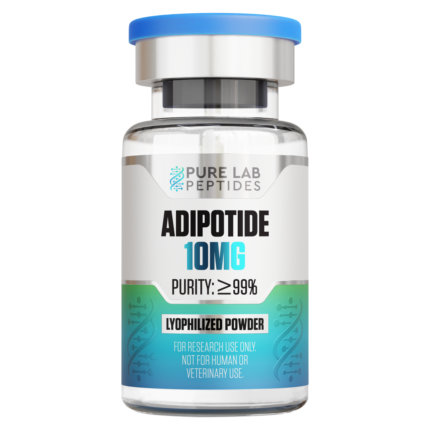
Adipotide 10mg
- Facilitates analysis of prohibitin-mediated apoptosis in white adipose tissue vascularization
- Supports investigation into targeted mitochondrial disruption within endothelial cell assays
- Enables research on rapid reduction of adipose mass and angiogenesis
- Useful for evaluating metabolic homeostasis following selective vascular ablation in models

AICAR 50mg
Research Studies:
- Potent AMPK agonist for investigating cellular energy homeostasis and metabolic flux signaling
- Facilitates analysis of ZMP-mediated stimulation of glucose uptake and fatty acid oxidation
- Supports research on PGC-1α-induced mitochondrial biogenesis and respiratory chain gene expression
- Enables investigation of exercise-mimetic effects on skeletal muscle metabolic reprogramming in assays
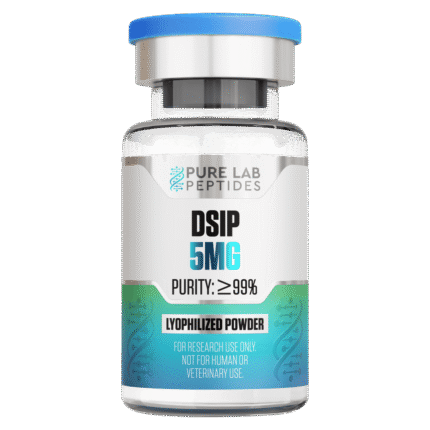
DSIP 5mg
Research Studies:
- Facilitates analysis of delta-sleep-inducing peptide-mediated modulation of thalamic and hypothalamic rhythms
- Supports investigation into GABAergic signaling and inhibition of corticotropin-releasing hormone release
- Enables research on NMDA-receptor antagonism and neuroprotective antioxidant enzyme expression assays
- Useful for evaluating central nervous system-mediated regulation of neuroendocrine and circadian pathways
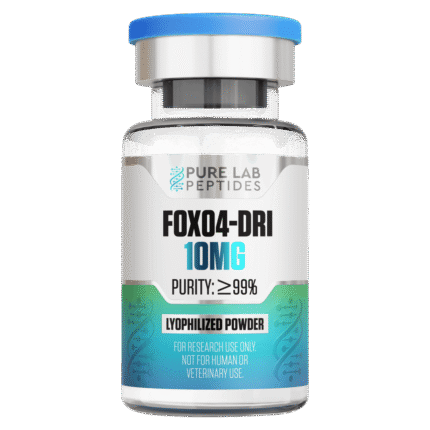
FOX04-DRI 10mg (Proxofim)
Research Studies:
- Facilitates analysis of FOXO4-p53 interaction inhibition for investigating targeted senolysis
- Supports investigation into p53-mediated mitochondrial apoptosis in senescent cell assays
- Enables research on selective elimination of senescent fibroblasts and myofibroblasts
- Useful for evaluating homeostatic recovery and cellular rejuvenation in aging-related models

HMG 75IU
- Facilitates analysis of FSH-R and LH-R dual receptor activation and signaling
- Supports investigation into steroidogenesis and follicle-stimulating hormone-mediated granulosa cell proliferation
- Enables research on luteinizing hormone-induced theca cell androgen production in assays
- Useful for evaluating gonadotropin-dependent maturation pathways in gametogenic cellular models

LL-37 5mg (CAP-18)
Research Studies:
- Facilitates analysis of hCAP-18 proteolytic cleavage into biologically active LL-37
- Supports investigation of FPR2-mediated chemotaxis and pro-inflammatory signaling in leukocytes
- Enables research on membrane permeabilization mechanisms within multidrug-resistant bacterial assays
- Useful for evaluating P2X7 receptor activation and NLRP3 inflammasome assembly
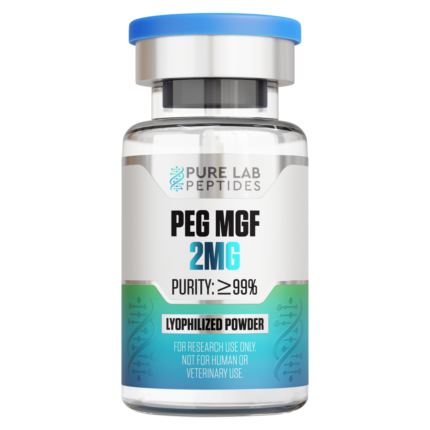
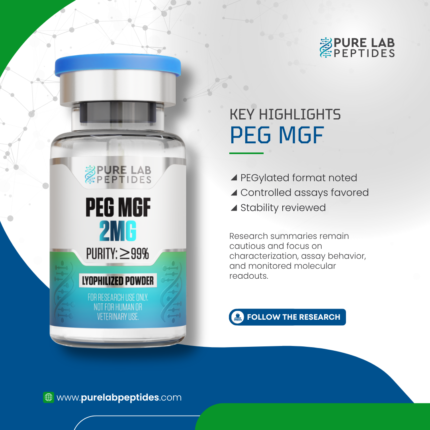
PEG MGF 2mg
Research Studies:
- Facilitates analysis of MGF-specific E-domain signaling via IGF-1 receptor-independent pathways
- Supports investigation into satellite cell activation and myoblast proliferation in assays
- Enables research on polyethylene glycol conjugation for enhanced peptide metabolic stability
- Useful for evaluating MAPK/ERK pathway modulation in muscle-derived cellular assay models

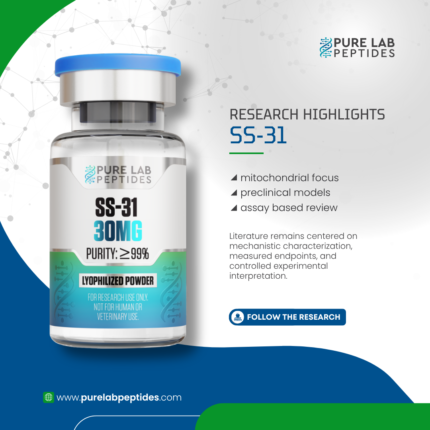
SS-31 30mg
Research Studies:
- Targets cardiolipin to stabilize mitochondrial cristae and organize respiratory chain supercomplexes
- Modulates cytochrome c function to enhance electron transport efficiency in oxidative phosphorylation
- Inhibits mitochondrial permeability transition pore opening to prevent stress-induced membrane depolarization
- Reduces reactive oxygen species generation while promoting adenosine triphosphate biosynthetic pathway flux